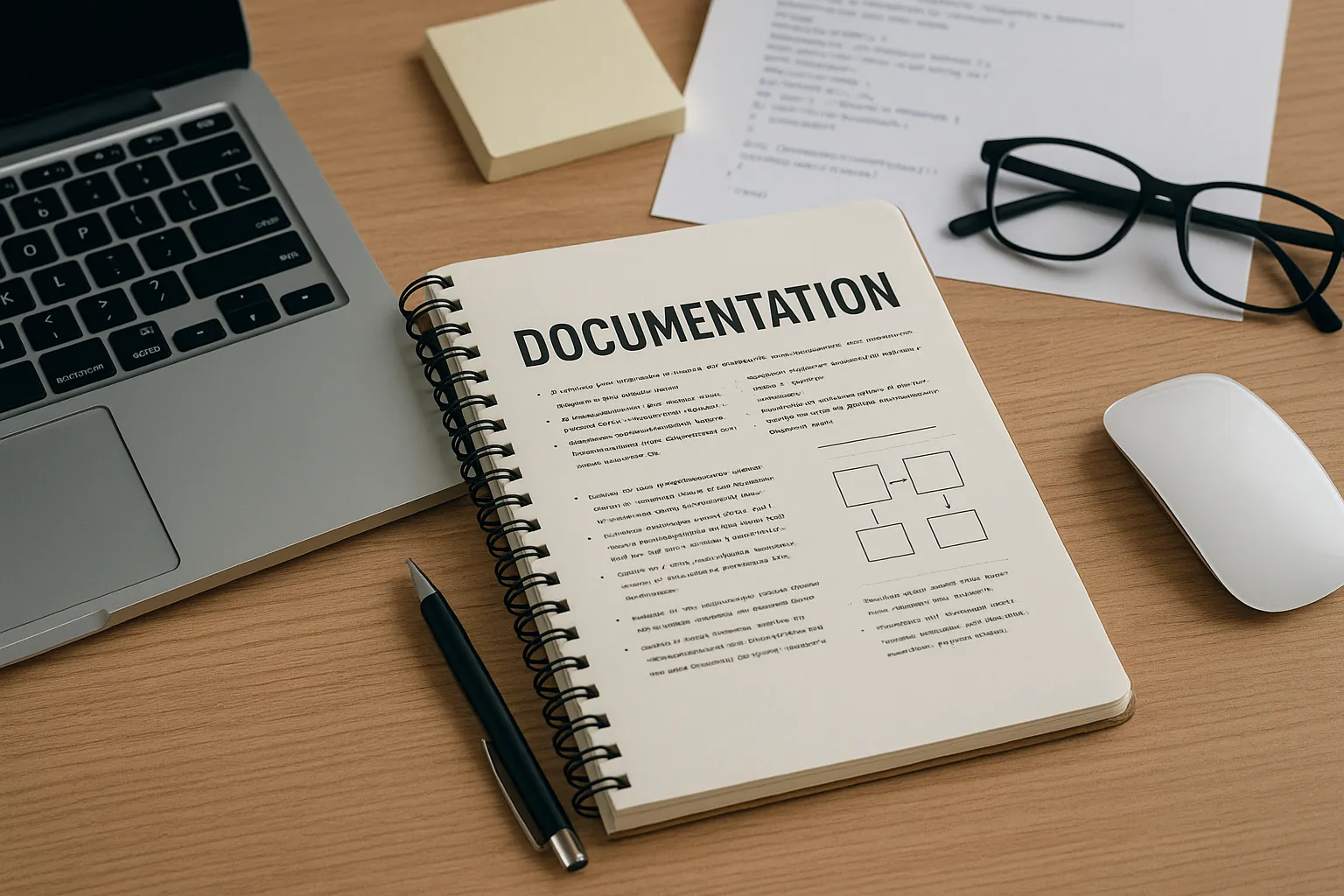
The Forgotten Pillar of Great Software
In the fast-paced world of software development, documentation often lags behind innovation. Teams race to build new features, deploy updates, and push releases — while the documentation that explains, supports, and sustains those systems frequently becomes an afterthought. Yet, time and again, history proves a simple truth: great software is not only built — it’s understood. And understanding comes from documentation.
Documentation is the invisible framework that holds technology together. It bridges the gap between the creators and the users, between code and comprehension. Without it, even the most advanced software becomes fragile, misunderstood, and inaccessible. Whether it’s a small internal tool or a global-scale product, success depends not just on how it runs, but on how well it’s explained, maintained, and shared.
In 2025’s increasingly distributed and collaborative tech world, where open-source ecosystems thrive and teams span time zones, documentation is more than a manual — it’s a communication infrastructure. It connects developers, users, and stakeholders in a shared language that makes complexity manageable and progress continuous.
Why Documentation Matters More Than Ever
Software today is no longer linear. Applications are modular, API-driven, and built by cross-functional teams using frameworks that evolve daily. Without clear documentation, onboarding a new developer, debugging an issue, or scaling a product can take exponentially longer. Documentation reduces this friction. It transforms tribal knowledge — the unspoken rules held by a few senior engineers — into institutional memory that everyone can access.
This matters because organizations now operate in an environment where knowledge loss is as damaging as system failure. When key contributors leave, projects can stall for months if no clear documentation exists. When teams expand internationally, inconsistent processes create inefficiencies. Documentation ensures continuity — it keeps systems alive even when people change.
For open-source communities, it’s even more critical. A well-documented project invites contribution; a poorly documented one repels it. The success of platforms like Linux, React, or Kubernetes isn’t just due to technical brilliance — it’s because developers can understand and extend them. In open ecosystems, documentation isn’t a side task; it’s the gateway to collaboration.
Moreover, as businesses increasingly rely on compliance and security audits, thorough documentation is now a necessity for accountability. From API specifications to change logs and privacy statements, documentation provides the traceability that modern regulations demand. It’s the record that shows not just what was built, but how and why.
Internal vs. External Documentation
Documentation takes many forms, serving different audiences. Internally, it keeps development teams aligned. Externally, it builds user confidence and trust. The best organizations treat both as equally vital components of software success.
Internal documentation includes architectural diagrams, API references, onboarding guides, and process documentation. These assets accelerate development, support DevOps workflows, and prevent duplicated effort. For example, when teams clearly document deployment pipelines and code review policies, they reduce miscommunication and speed up delivery.
External documentation, on the other hand, speaks to users, customers, and the wider community. It includes installation guides, user manuals, tutorials, and FAQs — everything that helps someone interact effectively with the software. When done well, external documentation reduces support costs, increases product adoption, and strengthens a brand’s credibility.
The most successful companies integrate both layers into a single documentation ecosystem — one that’s continuously updated, searchable, and accessible. Developers and users alike can find what they need without sifting through outdated wikis or disconnected notes.
In essence, internal documentation keeps the team aligned, while external documentation keeps the world engaged.
The Documentation-Development Connection
A common misconception is that documentation is something created after development — a step that follows coding, testing, and release. But in reality, documentation should evolve alongside the software itself.
In agile environments, every sprint should produce not only code but clarity. Each feature added or bug fixed should come with corresponding updates to documentation. This continuous integration of documentation ensures that knowledge grows with the system rather than lagging behind it.
Modern tools make this process easier. Platforms like Docusaurus, Read the Docs, and GitBook allow teams to version their documentation the same way they version code. Developers can create pull requests that include both code changes and documentation updates. When a feature ships, its explanation ships with it.
This approach eliminates the disconnect between engineers and technical writers — both work collaboratively within the same repositories and workflows. Documentation becomes part of the development lifecycle, not an afterthought to it.
The best documentation mirrors the principles of good code: clarity, consistency, and simplicity. Just as clean architecture minimizes technical debt, well-structured documentation minimizes knowledge debt — the hidden cost of unclear communication that slows teams down over time.
Good Documentation as a User Experience
Documentation is often viewed as a purely informational resource, but in truth, it’s an extension of the user experience (UX). When users open a guide or API reference, they are interacting with the product just as much as when they use its interface.
Good documentation doesn’t just list steps — it tells a story. It anticipates questions, explains context, and guides users from confusion to confidence. The tone is approachable, the structure intuitive, and the navigation effortless. Just as UX designers focus on reducing friction in interfaces, documentation writers aim to reduce friction in understanding.
Consider the difference between a command-line tool with sparse readme notes and one with a clear, narrative-style tutorial that walks users through real scenarios. The second tool feels more professional, trustworthy, and accessible — not because it’s technically better, but because it communicates better.
This is why many companies now include documentation design within their UX departments. Technical writers collaborate with designers, developers, and product managers to ensure that written content aligns with the brand’s overall user experience. The result is documentation that not only informs but engages — turning users into advocates.
Tools, Automation, and the Rise of Living Documentation
Keeping documentation accurate and up to date is one of the biggest challenges in modern software teams. With rapid release cycles and distributed collaboration, outdated docs can appear within weeks. To combat this, many teams are turning to automated and living documentation systems.
“Living documentation” refers to systems that update themselves based on the current state of the codebase. For example, API documentation can be generated directly from annotations within the source code, ensuring that the reference material always matches the latest version. Tools like Swagger (OpenAPI), JSDoc, and Sphinx automate much of this process.
This automation reduces human error and ensures consistency, but it doesn’t replace the need for narrative. Auto-generated docs show what the software does — human-written docs explain why. The two together form a complete picture.
Continuous documentation is another trend gaining traction. Just as continuous integration (CI) ensures code quality, continuous documentation ensures clarity. Documentation pipelines check formatting, validate links, and publish updates automatically when new commits are merged.
This level of automation turns documentation from a static artifact into a dynamic component of the product itself — always current, always evolving, always alive.
The Cultural Shift Toward Documentation
Beyond the tools and systems, effective documentation requires a cultural mindset. Teams must see writing as part of engineering, not separate from it. The most innovative developers document because they understand that future success — their own and the organization’s — depends on how well others can build upon their work.
Leaders set this tone. When management prioritizes documentation, allocates time for it, and recognizes it as valuable output, the entire organization follows suit. This shift transforms documentation from a chore into a craft — one that celebrates clarity as much as creativity.
Ultimately, the culture of documentation reflects the culture of respect: respect for teammates who will maintain the system, for users who will depend on it, and for future developers who will extend it. In that sense, documentation is not just technical writing — it’s an act of empathy.
Documentation as a Collaboration Tool
The value of documentation extends far beyond technical accuracy — it’s a collaborative framework that keeps entire teams synchronized. In a world where remote and hybrid work have become the default, developers, designers, QA testers, and product managers rarely sit in the same room. Documentation becomes the digital meeting table where everyone gathers to align on how things work, why decisions were made, and what comes next.
For engineering teams, shared documentation prevents confusion over processes and expectations. When onboarding new developers, clear setup instructions and codebase overviews reduce ramp-up time dramatically. Product managers use documentation to communicate requirements and business context. Support teams rely on it to answer customer questions accurately. Even marketing departments depend on well-documented APIs and feature descriptions to promote the product effectively.
This interconnectedness turns documentation into the central nervous system of software development — transmitting knowledge between teams and ensuring that the right information reaches the right people at the right time.
The best organizations go a step further by making documentation interactive. Internal wikis link to real dashboards and repositories; API portals include live testing environments; and README files connect directly to code snippets or demos. These integrations transform documentation from static text into a living collaboration platform — one that drives productivity and creativity simultaneously.
Onboarding and Knowledge Retention
The success of a software team is often measured by how quickly new members can contribute meaningfully. A project might be technically brilliant, but if it takes weeks for a developer to understand its structure or dependencies, productivity suffers.
Comprehensive documentation shortens this gap. Clear explanations of architecture, libraries, and build processes empower newcomers to start coding confidently from day one. Good documentation answers the unspoken questions — Why was this framework chosen? What’s the workflow for feature testing? How are deployments handled?
When onboarding processes rely only on oral knowledge transfer, organizations risk knowledge loss every time a senior employee leaves. Documentation captures this institutional memory, ensuring that projects continue seamlessly despite personnel changes.
In high-turnover or fast-scaling environments, this is invaluable. Startups that document early grow more sustainably because their teams spend less time rediscovering what’s already been learned. Established enterprises maintain continuity across departments and time zones. The return on investment is measured not only in hours saved but in long-term organizational intelligence.
Improving Developer Experience (DX)
While user experience (UX) focuses on end users, developer experience (DX) focuses on those who build and maintain the software. And in 2025, DX is recognized as one of the most critical factors in software success. Documentation sits at the heart of this experience.
Developers prefer clear, concise explanations, examples that actually work, and references that don’t waste time. Poorly written docs slow progress, increase frustration, and lead to mistakes. On the other hand, great documentation enhances creativity and confidence. It allows developers to explore APIs or frameworks freely without second-guessing how things are supposed to work.
Many organizations now hire Developer Experience Engineers whose job includes writing, maintaining, and improving documentation. Their focus is on making knowledge consumable — not by dumbing it down, but by making it approachable. They create code samples, quick-start guides, and conceptual overviews that respect developers’ time while keeping the learning curve smooth.
This attention to DX has a measurable impact. Well-documented systems attract more contributors, reduce support tickets, and increase product adoption. In open-source communities, documentation quality often determines whether a project thrives or fades into obscurity. In commercial software, it drives faster integration and happier customers.
In short, documentation is not just a support asset — it’s part of the developer experience strategy that defines modern software competitiveness.
Documentation and Quality Assurance
In traditional workflows, documentation and quality assurance (QA) were often treated as separate phases. Today, they are increasingly intertwined. Testing doesn’t just verify that software works — it also verifies that it behaves as described. And to do that, documentation must be accurate and synchronized.
QA teams use documentation as the baseline for test plans and acceptance criteria. If documentation is incomplete or outdated, testing suffers. Conversely, detailed documentation enables automated test generation — where scripts are derived directly from functional descriptions and API specifications.
Modern documentation frameworks such as OpenAPI or Gherkin allow teams to create executable documentation — readable by humans, interpretable by machines. This dual-purpose writing ensures consistency between what’s documented and what’s delivered.
The loop then completes itself: testing results feed back into documentation updates. If a feature behaves differently in production than described, the documentation evolves. This cycle of validation keeps both code and communication aligned, ensuring that users always receive accurate information.
The Aesthetic and Emotional Side of Documentation
While documentation is fundamentally technical, its design and tone profoundly affect how people perceive and use it. A well-structured layout, readable typography, and thoughtful visuals can transform a dry manual into an enjoyable learning experience.
Humans process information visually, and developers are no exception. Flowcharts, architecture diagrams, and annotated screenshots provide cognitive shortcuts that make complex systems easier to grasp. Documentation that looks good feels trustworthy — it communicates professionalism and attention to detail.
Equally important is tone. Documentation doesn’t need to sound robotic or overly formal. A friendly, encouraging voice helps users feel supported, especially when they encounter challenges. The goal isn’t entertainment but empathy — anticipating confusion and responding with clarity and warmth.
This human-centered approach turns documentation into more than a technical reference — it becomes a guide, a mentor, and a source of confidence. Teams that invest in this emotional dimension find that users engage more deeply and remain loyal longer.
Sustainability and the Lifecycle of Documentation
Software evolves continuously — and documentation must evolve with it. Yet many organizations still treat documentation as a one-time project rather than an ongoing commitment. This short-term mindset leads to decay: outdated pages, broken links, and irrelevant examples that frustrate users.
Sustainable documentation requires governance and maintenance. Teams should establish ownership, version control, and review cycles just like they do for code. Some organizations designate “documentation champions” who ensure updates happen regularly, coordinate contributions, and maintain consistency in tone and style.
Automated reminders and pull-request templates help developers remember to update documentation whenever they modify the code. Reviewers check not only functionality but also whether accompanying docs are accurate. Over time, this discipline becomes cultural — part of the development rhythm.
Moreover, archiving is as important as updating. Old versions of documentation should remain accessible for legacy systems, clearly labeled to avoid confusion. This transparency respects the users who rely on older versions while keeping the main documentation clean and current.
The ultimate goal is to create documentation that lives and grows — not one that fades with each release cycle.
Measuring the Impact of Documentation
Unlike code performance or user adoption, documentation impact can seem hard to measure. Yet there are clear indicators of its effectiveness. Reduced onboarding time, fewer support tickets, higher contributor engagement, and faster integration cycles all point to strong documentation practices.
Analytics tools now track user interaction within documentation portals. Metrics such as time on page, search frequency, and bounce rate reveal where users struggle or find clarity. Feedback forms embedded within docs invite direct user input, creating a feedback loop that guides continuous improvement.
Some organizations even treat documentation as part of their product analytics dashboard, assigning KPIs such as documentation accuracy rates or update frequency. This data-driven approach helps justify investment, proving that writing and maintaining clear documentation yields tangible business results.
Ultimately, good documentation saves time, reduces risk, and strengthens brand credibility — all measurable outcomes that contribute directly to long-term success.
Conclusion: Documentation as Legacy
In the end, documentation is more than a technical necessity — it’s the legacy of every software project. Code may change, frameworks may fade, but documentation endures as the record of how ideas became reality.
It’s what allows future developers to pick up where others left off, what helps users trust the tools they depend on, and what ensures that innovation remains accessible to everyone.
Documentation is not just words on a page; it’s the collective memory of a community — a living proof that collaboration, clarity, and communication are as vital to success as the technology itself.
In a world obsessed with speed, the Okanagan lesson — and the global one — is simple: slow down long enough to explain. Because in the long run, the teams that write clearly are the ones that build things that last.