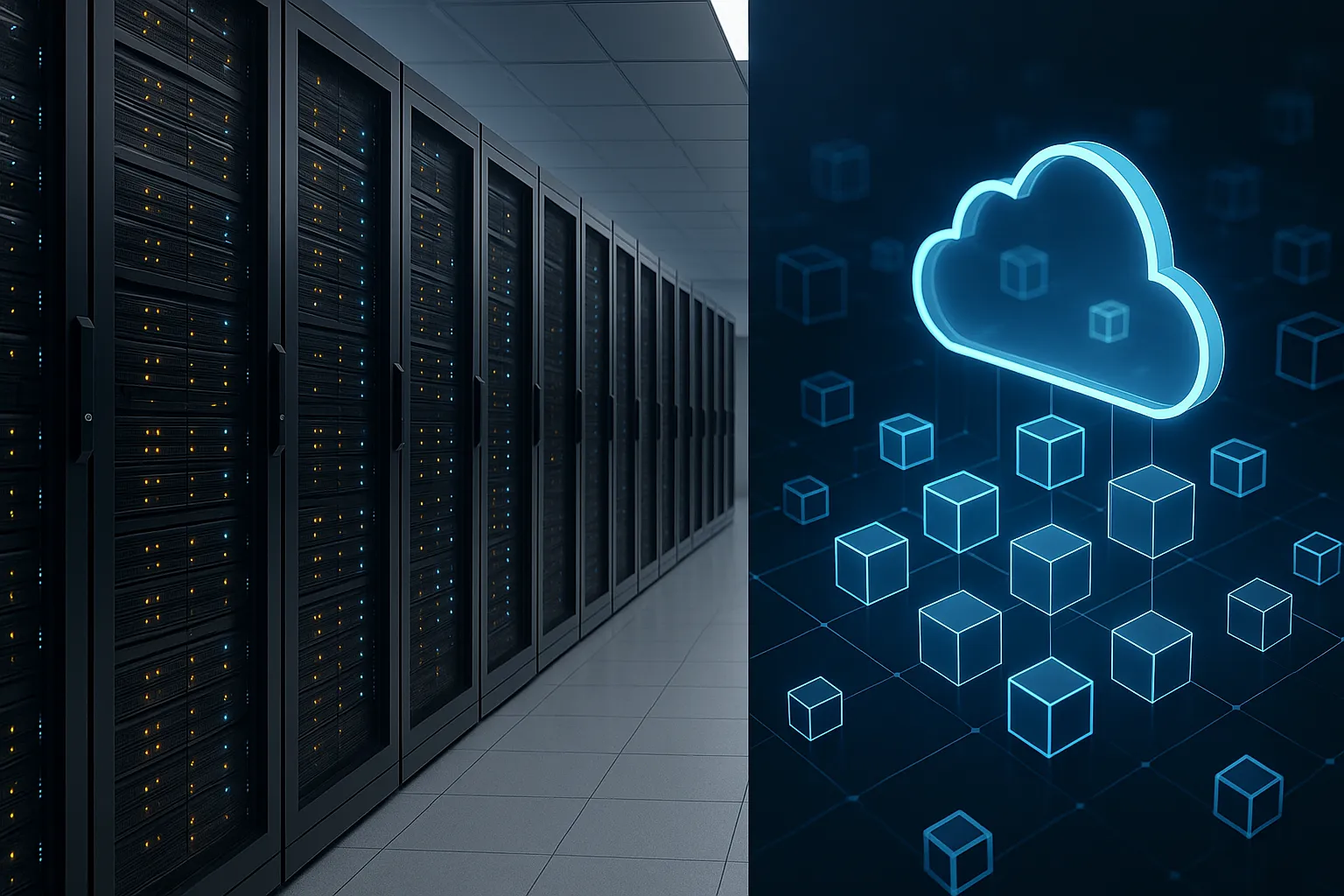
The Evolution of the Datacenter
Datacenters have always been the silent engines of the digital world. Every search query, video stream, and cloud transaction depends on these vast networks of servers humming quietly behind the scenes. But the datacenter of 2025 looks nothing like its predecessors. What was once a room full of physical machines has evolved into a distributed, software-defined ecosystem that stretches across continents.
In the early days of computing, datacenters were hardware-centric. Businesses invested in racks of physical servers, each dedicated to specific applications. This model offered control but came with limitations — high costs, low scalability, and complex maintenance. If a server failed, downtime was inevitable. If demand grew, new machines had to be purchased, installed, and configured manually.
Then came virtualization — the first major revolution. Tools like VMware and Xen allowed a single physical server to host multiple virtual machines, dramatically improving resource utilization. Suddenly, computing power became fluid. Workloads could be moved, scaled, or cloned with minimal downtime. This shift laid the foundation for what would become the modern cloud era.
As internet use exploded, businesses faced a new challenge: global scalability. Static datacenters could no longer keep up with the velocity of digital demand. The next step was inevitable — decentralization. Clusters of servers, connected through high-speed networks, became the backbone of modern infrastructure. These clusters evolved into cloud nodes — lightweight, distributed computing units capable of dynamic coordination. Together, they form the datacenters of today: flexible, adaptive, and almost invisible to end users.
From Metal to Virtual Machines
The transition from physical hardware to virtualized environments marked a turning point in IT history. Before virtualization, datacenter growth was linear — more traffic meant more machines. Each server required manual configuration, dedicated power, cooling, and physical space. Inefficiency was built into the system.
Virtualization changed everything. Instead of running one operating system per server, administrators could partition resources and run multiple environments on a single machine. This increased efficiency and dramatically reduced hardware costs. Tasks that once took hours — provisioning, backups, migrations — could now be executed in minutes.
However, virtualization also introduced new layers of abstraction. Managing hundreds of virtual machines soon became as complex as managing physical servers. To address this, automation and orchestration tools emerged. Technologies like Ansible, Puppet, and Chef allowed system administrators to define infrastructure as code, automating repetitive tasks and enforcing consistency across environments.
This was the beginning of the infrastructure-as-code revolution, which transformed how datacenters were built and maintained. Human intervention gave way to automation. Physical hardware became a platform for software-defined logic — a pattern that continues to define the industry today.
The Rise of the Cloud Node
As the 2010s unfolded, the concept of a datacenter expanded beyond physical walls. Companies like Amazon, Google, and Microsoft pioneered massive cloud infrastructures, offering computing resources on demand. This was not just about storage or processing power; it was about elasticity — the ability to scale instantly in response to changing workloads.
The “cloud node” emerged as the new building block of this distributed architecture. A node isn’t a single server but a self-contained computing unit capable of handling workloads, communicating with other nodes, and adapting to network demands. These nodes exist everywhere — in corporate datacenters, cloud regions, and edge environments closer to users.
This distributed model offers resilience. If one node fails, others pick up the load automatically. Workloads shift dynamically based on performance, latency, or geographic proximity. This is what makes today’s digital services — from streaming platforms to online banking — so reliable and fast.
Modern datacenters no longer depend on centralized infrastructure; they operate as federations of nodes working together in perfect synchronization. Tools like Kubernetes have become the operating systems of this distributed world, orchestrating thousands of containers across global networks.
The Container Revolution
If virtualization redefined efficiency, containerization redefined portability. Unlike virtual machines, containers package applications with only the libraries and dependencies they need, making them lightweight and fast.
Technologies like Docker made container deployment accessible, while Kubernetes emerged as the orchestration standard. These tools allowed developers to deploy software across environments — from local machines to global cloud clusters — with minimal friction.
The result was an explosion in scalability. Containers could be launched in seconds, replicated automatically, and scaled horizontally across multiple nodes. For businesses, this meant agility — the ability to respond instantly to customer demand or deploy new features without downtime.
Datacenters became software-defined ecosystems, where infrastructure and application layers merged. Operations teams evolved into DevOps teams, blending development and system management into a continuous workflow. This shift not only improved efficiency but also bridged the gap between engineering and business strategy.
Edge Computing and Decentralization
While cloud nodes centralized processing power in massive data hubs, a new frontier emerged — edge computing. The idea was simple: bring computing closer to users. Instead of routing every request through distant datacenters, data could be processed locally, reducing latency and bandwidth costs.
Edge computing reintroduces the concept of physical proximity but in a smarter way. Small-scale nodes — embedded in IoT devices, 5G base stations, or regional hubs — act as miniature datacenters, processing data in real time. For industries like autonomous vehicles, healthcare, and logistics, this responsiveness is critical.
The integration of edge and cloud represents the hybrid datacenter model of 2025. Workloads are dynamically distributed based on efficiency, compliance, or performance needs. Sensitive data can stay on-premises, while large-scale analytics run in the cloud. This hybrid flexibility enables businesses to maintain control without sacrificing scalability.
In essence, edge computing completes the cycle of evolution: from centralized clusters to globally distributed intelligence. Each layer of infrastructure — physical, virtual, containerized, and edge — now works together to form a seamless digital fabric.
Sustainability and Efficiency
As datacenters grew in scale, so did their environmental impact. In 2025, sustainability is no longer optional; it’s a strategic priority. Power efficiency, renewable energy integration, and carbon footprint monitoring are built into datacenter design from the ground up.
Modern datacenters use AI-driven optimization to balance workloads, adjust cooling systems, and predict energy consumption patterns. Liquid cooling and advanced airflow systems replace traditional fan-based setups, improving energy efficiency dramatically.
Moreover, hyperscale providers are investing heavily in renewable sources. Google, for instance, operates many of its datacenters on carbon-free energy, while smaller providers are adopting modular designs that can be powered by local renewables.
Sustainability has also become a competitive differentiator. Businesses increasingly choose hosting partners based on environmental performance. Datacenters of the future will be measured not only by uptime and speed but by their contribution to a cleaner planet.
A Glimpse into the Future of Infrastructure
The datacenter’s transformation mirrors the evolution of technology itself — from physical to digital, from static to fluid, from isolated to interconnected. As we move deeper into the era of automation, artificial intelligence, and edge computing, the boundaries between hardware and software continue to blur.
Tomorrow’s datacenters may not exist in traditional form at all. They’ll be autonomous, self-healing systems, capable of predicting failures, reallocating resources, and optimizing themselves without human input. Machine learning will analyze performance metrics in real time, fine-tuning operations automatically.
Yet, despite the complexity, the purpose remains simple: to deliver fast, reliable, and sustainable computing power to every corner of the world.
The evolution from physical clusters to cloud nodes is more than a technological journey — it’s a story of adaptability, efficiency, and imagination. Each stage in this transformation reflects humanity’s drive to do more with less, to build smarter systems that respond to our needs before we even notice them.
And as new technologies continue to emerge, one thing is certain — the datacenter, in whatever form it takes next, will remain the heartbeat of the digital age.
Automation and the Rise of Self-Managing Systems
The modern datacenter has reached a level of complexity that makes manual management nearly impossible. Thousands of servers, countless containers, and fluctuating workloads operate simultaneously across global regions. Human administrators can no longer monitor every process or predict every failure — which is why automation has become the new foundation of datacenter management.
Automation is not just about running scripts or scheduling backups. It’s about creating systems that think and react. Artificial intelligence and machine learning now play central roles in managing infrastructure. Predictive algorithms identify unusual behavior, allocate resources, and even correct errors before they cause downtime.
This self-managing approach transforms how datacenters operate. Instead of reacting to incidents, systems anticipate them. Instead of scaling reactively, they expand and contract intelligently based on demand. The datacenter becomes an autonomous organism — continuously optimizing for speed, cost, and efficiency.
For example, AIOps platforms (Artificial Intelligence for IT Operations) use machine learning to analyze log data, detect anomalies, and automate responses. These tools can identify patterns invisible to human eyes, preventing performance degradation and improving uptime. Combined with infrastructure-as-code and orchestration technologies, AIOps turns datacenters into adaptive ecosystems — capable of evolving on their own.
The result is not just efficiency but resilience. By reducing human error and improving predictability, automation ensures that datacenters can operate 24/7 with minimal intervention. It’s the next logical step in the journey that began with virtualization decades ago — a transition from manual control to intelligent autonomy.
Hybrid and Multi-Cloud Strategies
No single cloud provider can meet every organization’s needs. That’s why the datacenter model of 2025 thrives on hybrid and multi-cloud architectures. These strategies blend on-premise infrastructure with multiple public cloud environments, allowing businesses to balance flexibility, security, and performance.
A hybrid model connects private datacenters with public clouds through encrypted networks and orchestration platforms like Kubernetes or OpenShift. Sensitive data and mission-critical systems remain on-premises, while high-demand or seasonal workloads shift seamlessly to the cloud. This balance gives organizations the best of both worlds — control where it matters, and scalability where it’s needed.
Multi-cloud, on the other hand, spreads workloads across several cloud providers. This avoids vendor lock-in and improves redundancy. If one provider experiences downtime, workloads can migrate automatically to another. Multi-cloud also allows teams to choose the best tools from each ecosystem — AWS for compute, Google Cloud for machine learning, and Azure for enterprise integrations.
The glue holding these environments together is orchestration. Modern orchestration platforms ensure that workloads communicate smoothly across data boundaries. With consistent APIs and monitoring dashboards, administrators gain a unified view of global infrastructure — even when it spans continents and providers.
Hybrid and multi-cloud strategies reflect a simple truth: datacenters are no longer confined spaces. They are borderless networks that adapt to business goals in real time.
The Edge and the Micro Datacenter Revolution
As digital demands move closer to the user, datacenters are following. The explosion of connected devices, IoT sensors, and autonomous systems has created an urgent need for low-latency processing. Traditional centralized datacenters can’t meet this demand, especially in applications where milliseconds matter — like autonomous driving, telemedicine, or smart manufacturing.
Enter the micro datacenter — compact, modular facilities located at the network edge. These small-scale nodes bring computing power to the source of data, enabling real-time analytics and decision-making. They can be deployed in urban areas, industrial sites, or even remote regions where connectivity is limited.
Edge computing also introduces new architectural challenges. Managing hundreds of distributed nodes requires advanced orchestration, high reliability, and strong security. To solve this, datacenter management platforms are integrating edge orchestration layers that monitor, update, and synchronize nodes automatically.
In this model, the cloud and edge no longer compete — they cooperate. The cloud handles global coordination, storage, and AI model training, while edge nodes perform local computation and immediate responses. The two layers form a symbiotic system that mirrors the human brain — centralized intelligence with distributed reflexes.
By 2025, this hybrid of cloud and edge has become the standard infrastructure for modern services. Every smartphone notification, smart home device, or connected vehicle relies on the invisible network of datacenters — from hyperscale clouds to neighborhood nodes.
Security in an Interconnected World
With great connectivity comes greater vulnerability. As datacenters expand across multiple regions and devices, securing this digital ecosystem becomes more complex. The traditional “perimeter defense” model — where a firewall protects a defined network boundary — no longer works in a decentralized environment.
Modern datacenters adopt a zero-trust security model, built on the principle that nothing inside or outside the network can be trusted by default. Every device, user, and service must continuously verify its identity before gaining access. Encryption, identity management, and behavioral analytics are the core pillars of this approach.
Automation plays a crucial role here as well. Machine learning models monitor traffic patterns to detect anomalies, automatically blocking suspicious activities or isolating compromised nodes. Software-defined networking (SDN) allows administrators to define security policies that adapt dynamically to workloads.
Data sovereignty is another major factor. With information flowing across borders, businesses must comply with privacy regulations like GDPR or regional data laws. Modern datacenters are designed with compliance in mind — featuring localized storage zones, auditable logs, and transparent access controls.
The goal is to make security continuous and adaptive, not static. In a world of constant change, datacenters must defend themselves in real time.
Cooling, Power, and the Quest for Efficiency
Energy efficiency remains one of the greatest challenges — and opportunities — for modern datacenters. With global data consumption skyrocketing, datacenters now account for a significant percentage of total electricity use. Achieving sustainability requires both technological innovation and operational discipline.
AI-driven energy management systems are revolutionizing this space. Sensors embedded throughout facilities collect temperature, humidity, and power usage data. Machine learning algorithms then optimize cooling strategies, balance server workloads, and predict maintenance needs.
Innovations in liquid cooling and immersion technology are also reducing energy waste. Instead of relying on massive air-conditioning systems, liquid coolants circulate directly over high-performance components, removing heat far more efficiently. These systems not only save power but extend hardware lifespan.
Moreover, datacenters are becoming more geographically strategic. Some are built in cooler climates to reduce cooling costs; others are located near renewable energy sources such as hydroelectric or wind farms. Sustainability certifications and carbon-neutral operations are becoming standard requirements rather than optional goals.
In 2025, efficiency isn’t just a metric — it’s a competitive advantage. Clients, investors, and regulators all demand transparency in environmental impact, pushing datacenters toward a future where computing and sustainability coexist harmoniously.
Artificial Intelligence Inside the Infrastructure
Beyond automation, artificial intelligence has become the operating intelligence of modern datacenters. AI models manage resource allocation, forecast capacity needs, and detect inefficiencies in real time.
For instance, AI systems can analyze millions of metrics per second — CPU temperature, network latency, energy usage — and make micro-adjustments continuously. This creates a self-optimizing infrastructure that learns from its environment and improves autonomously.
In large-scale operations, predictive AI prevents failures before they occur. When a server begins to show abnormal patterns, machine learning models can anticipate potential hardware issues and trigger preventive maintenance. Similarly, AI-driven orchestration tools balance workloads across multiple clouds to minimize latency and cost simultaneously.
The next evolution will be AI-native datacenters, designed from the ground up with intelligence at every layer. These facilities won’t just host data — they’ll interpret it, analyze it, and act upon it automatically. This is the foundation of the emerging “intelligent infrastructure” era.
Conclusion: The Datacenter Without Walls
The modern datacenter has transcended its physical roots. What began as a warehouse full of blinking machines has become a living network of intelligence, stretching from the core cloud to the edge of every connected device.
Its evolution — from physical clusters to virtualized environments, from containers to cloud nodes, and now to self-optimizing ecosystems — mirrors the evolution of technology itself. Every advancement has pushed infrastructure toward one goal: efficiency through intelligence.
In 2025, the datacenter is no longer a place — it’s a platform. It lives everywhere, operates autonomously, and grows continuously. It’s invisible to most users but essential to everything they do online.
And as AI, sustainability, and edge technologies converge, the datacenter will continue to adapt — shaping a world where information flows freely, instantly, and responsibly. The heartbeat of the digital age has never been stronger, and its rhythm will only accelerate as we move into the next chapter of computing.